
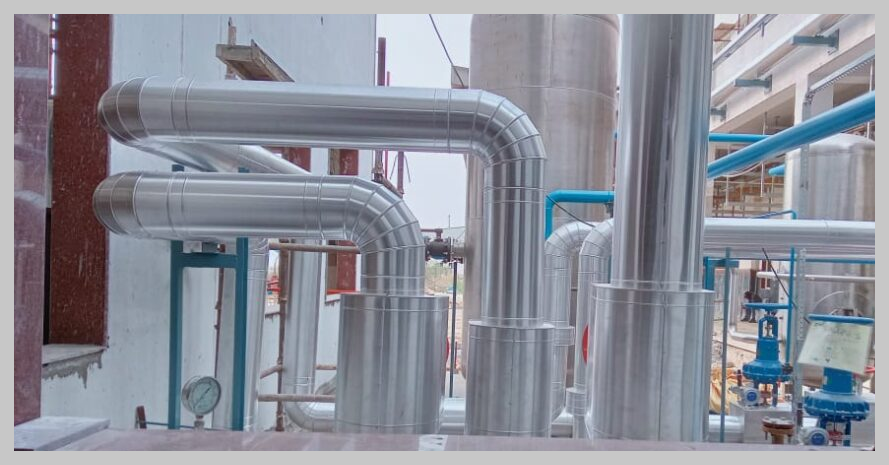
HOT INSULATION
Hot insulation is a phenomenon of maintaining a high temperature of more than 60 degree around an object such that its energy is not allowed to escape into the atmosphere. It’s basically a shield in between the atmosphere and the object.
The primary purposes of hot insulation are:
1. Heat retention: To prevent heat from escaping, which improves the efficiency of heating systems and reduces energy consumption.
2. Protection: To safeguard workers and nearby equipment from the dangers of contact with hot surfaces, reducing the risk of burns and accidents.
3. Energy savings: By minimizing heat loss, hot insulation reduces the need for additional energy input to maintain temperature levels.
Materials commonly used for hot insulation include:
Mineral wool (rock wool or slag wool): Known for its high-temperature resistance and excellent insulating properties.
Calcium silicate: A high-performance insulation material resistant to high temperatures, often used for industrial applications.
Ceramic fibers: Typically used for insulation in furnaces, kilns, and high-heat areas.
Fiberglass: Often used in lower-temperature applications but can be adapted for hot surfaces with proper coatings.
Silica-based insulation: Used for extreme temperature conditions.
- Hot insulation plays a crucial role in industries such as oil and gas, power generation, manufacturing, and HVAC systems. It ensures the safe, efficient, and cost-effective operation of equipment exposed to high temperatures.
